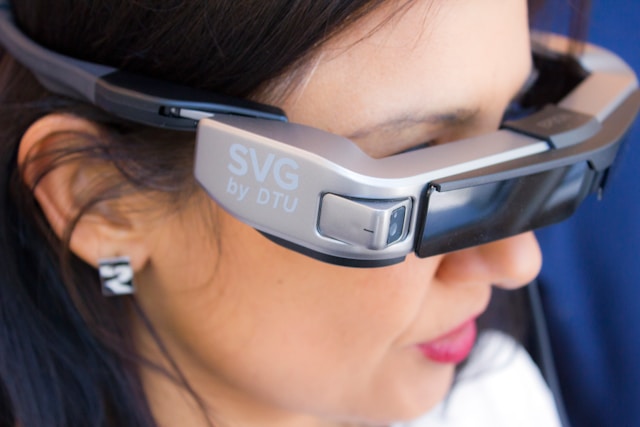
For nearly two decades, the smartphone has been the undisputed center of our digital universe. It is the first thing we reach for in the morning and the last thing we see at night. However, as we move through 2026, a quiet insurrection is taking place on our faces. The “Screenless Revolution” is no longer a distant futurist dream; it is a rapidly maturing market. With the arrival of advanced augmented reality (AR) optics, integrated AI, and stylish frames that blend seamlessly into daily life, the question has shifted from “if” smart glasses will challenge the phone to “how soon” they will become our primary interface.
The Pivot to Heads-Up Living
The fundamental appeal of smart glasses lies in the transition from “heads-down” to “heads-up” computing. The smartphone, for all its utility, is a disruptive device; it requires us to break eye contact with our environment and retreat into a glass rectangle. Smart glasses flip this script by overlaying digital information directly onto our field of vision.
In 2026, this technology has moved beyond simple notifications. High-end AR glasses like the XREAL One Pro and Viture Luma Pro now offer massive “virtual canvases” that can anchor multiple monitors in mid-air. For the urban professional or the digital nomad, this means the ability to work on a 300-inch ultrawide display while sitting in a coffee shop, all without carrying a laptop or pulling out a phone. This spatial utility is the first true blow to the smartphone’s dominance in productivity.
AI: The Invisible OS
While the displays are impressive, the real engine of the screenless revolution is Artificial Intelligence. The smart glasses of 2026, such as the second-generation Ray-Ban Meta and the Rokid AI series, have evolved into “multimodal” assistants. Because these devices share your perspective through integrated cameras, the AI can “see” what you see.
This enables a level of contextual assistance that a phone simply cannot match. If you are traveling in a foreign city, the glasses can translate street signs and menus in real-time, appearing as a digital overlay on the physical object. If you are repairing a piece of machinery, the AI can highlight the specific bolt you need to turn. By handling these “glanceable” tasks through voice and vision, smart glasses are effectively stripping away the hundreds of “micro-interactions” we previously performed on our phones.
The “Companion” Phase vs. Full Replacement
Despite the rapid advancement, the industry consensus in 2026 is that we are currently in a “Companion Phase.” For most users, smart glasses have replaced the phone for specific workflows—navigation, hands-free messaging, photography, and quick information retrieval—but they have not yet killed the handset entirely.
The smartphone remains the “heavy lifter” of our digital lives. Tasks that require precision, such as long-form writing, complex photo editing, or secure banking, still benefit from the high-resolution touch interface of a mobile screen. Furthermore, the physical constraints of glasses—specifically battery life and thermal management—mean that high-intensity processing is often “offloaded” to the phone in your pocket via high-speed wireless links. The phone has become a pocket-sized server, providing the raw power while the glasses provide the interface.
Design and Social Acceptance: The Style Hurdle
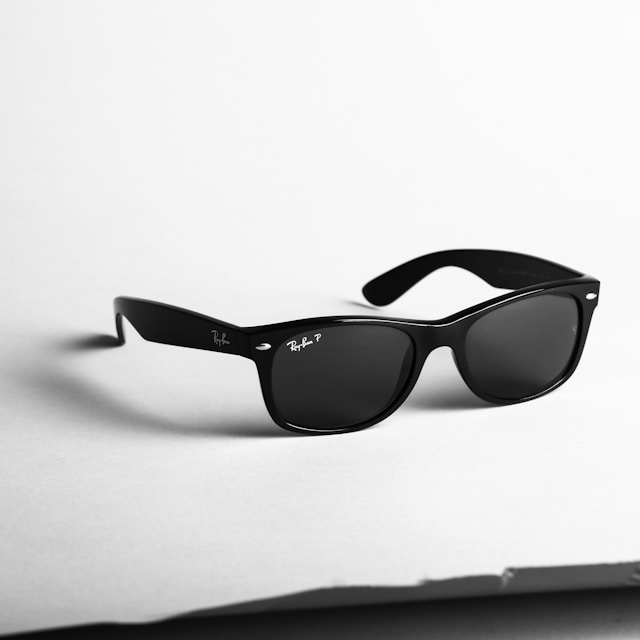
The graveyard of early smart glasses is filled with devices that looked too “techy” or intrusive. The breakthrough in 2026 has been the “stealth” design. Partnerships between tech giants and iconic eyewear brands like Ray-Ban and Oakley have produced frames that are indistinguishable from high-fashion eyewear.
Social acceptance is the silent gatekeeper of the screenless revolution. In 2026, the “creepy” factor has been mitigated through clearer recording indicators and a shift toward “audio-first” or “glance-first” utility rather than constant filming. As more people adopt these devices for their practical benefits—like turn-by-turn navigation that doesn’t require looking at a map—the sight of someone talking to their glasses has moved from an oddity to a common urban occurrence.
The Health and Wellness Dividend
An unexpected driver of the screenless revolution is the growing “Digital Wellness” movement. “Tech fatigue” is a recognized phenomenon in 2026, with users actively seeking ways to reduce their screen time. Smart glasses offer a paradoxical solution: more technology to use less of it.
By moving notifications to the periphery and relying on voice-first interactions, users find they are less likely to fall into the “scroll hole” of social media. When you check a text on your glasses, you see the message and return to the world. When you check it on your phone, you are one swipe away from an hour of mindless browsing. This ability to stay connected without being consumed is a powerful incentive for the modern, health-conscious consumer.
Overcoming the Hardware Ceiling
For smart glasses to fully replace the phone, two technical “ceilings” must be shattered: Battery life and Field of View (FoV). In early 2026, most AR glasses offer between 4 to 6 hours of active use, which is sufficient for a workday but not for a 24-hour cycle.
However, the introduction of geometric waveguides and silicon-anode batteries is beginning to change the math. New displays are becoming more light-efficient, requiring less power to produce bright, daylight-visible images. Simultaneously, “neural bands”—wearables on the wrist that detect subtle muscle movements—are replacing voice and touch as the primary input method, allowing for silent, discreet control that feels like telepathy.
The Ecosystem War: Google, Apple, and Meta
The battle for our faces is also a battle of ecosystems. In 2026, the “Android XR” platform has unified many third-party manufacturers, allowing for a seamless flow of apps between phones and glasses. Meanwhile, Meta has leveraged its massive social graph to make smart glasses the ultimate tool for “first-person” content creation.
The winner of this war will be the company that creates the most frictionless “hand-off.” If you can start a navigation route on your car’s dashboard, have it move to your glasses as you walk, and then have it appear on your phone when you need to see a detailed floor plan, the hardware becomes secondary to the experience. The “Phone-less” future is less about the disappearance of the phone and more about the disappearance of its necessity.
Conclusion
The Screenless Revolution is not an overnight event, but a steady migration. In 2026, smart glasses have successfully captured the “active” hours of our lives—the time spent moving, socializing, and working in the world. While the smartphone remains in our pockets as a vital tool for deep work and private consumption, its role as the “window to the world” is fading.
As displays become sharper, batteries last longer, and AI becomes more intuitive, the gravity of our digital lives will continue to shift upward. We are finally reaching a point where we can be fully connected without being disconnected from the reality in front of us. The phone isn’t dead yet, but for the first time in twenty years, it has a serious rival for our attention—and it’s looking us right in the eye.