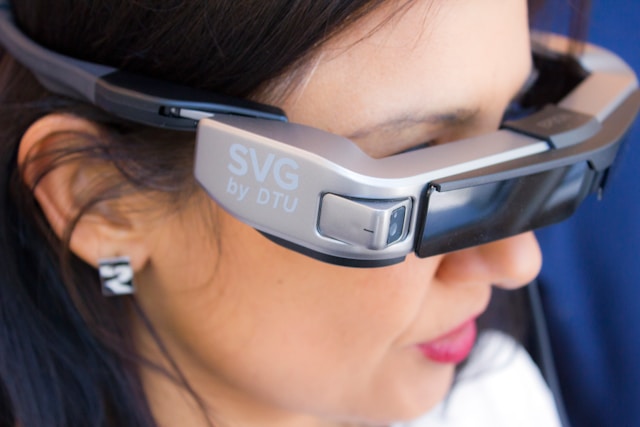
As we move through 2026, the rapid adoption of smart glasses has introduced a social friction not seen since the early days of the smartphone. While these devices offer unparalleled utility—from real-time translation to hands-free navigation—they carry a significant “social tax.” Because many of these frames look indistinguishable from traditional eyewear yet contain high-definition cameras and microphones, we have entered a period of profound cultural negotiation. Developing a new “Etiquette of Eyewear” is no longer just a concern for tech enthusiasts; it is a necessary skill for anyone navigating the professional and personal landscapes of the modern world.
The Visibility Paradox: Transparency vs. Stealth
The primary challenge of smart glasses etiquette is the “Invisible Camera.” Unlike a smartphone, which must be physically held up to record, smart glasses record from a first-person perspective with zero external hardware movement. This has led to a widespread anxiety regarding “passive surveillance.”
To address this, the social norm of 2026 has shifted toward radical transparency. Leading manufacturers have implemented “Privacy LEDs”—bright, unhackable lights that pulse when a recording is in progress. However, etiquette dictates that a light is not enough. In intimate social settings or one-on-one meetings, the “Polite Disclosure” has become the standard. Much like one might ask, “Do you mind if I record this call?”, the modern wearer often begins an interaction by clarifying the state of their glasses: “Just so you know, these are smart glasses, but the camera is off.” This verbal contract establishes trust and prevents the underlying tension of “Am I being filmed?” from derailing the conversation.
The “Gaze” and the Problem of Distraction
One of the most frequent breaches of etiquette in the camera-on era is “Digital Distraction.” Smart glasses allow a user to check emails, read headlines, or watch a video feed while appearing to maintain eye contact. However, the human brain is not yet perfected at “splitting” its focus.
The “Micro-Gaze”—a subtle shift in eye movement toward the corner of the lens where the display sits—is often perceptible to others. In a social or professional setting, this is the 2026 equivalent of checking your phone under the table. Etiquette now suggests that during focused conversation, “Display-Off” mode should be the default. A wearer who is constantly glancing at their internal notifications is perceived as dismissive and disconnected. The rule is simple: if the person in front of you deserves your time, they deserve your full field of vision.
Contextual Boundaries: Where Glasses Go to Sleep
As these devices become ubiquitous, “No-Tech Zones” are being redefined. While it was once enough to silence a phone, the “always-on” nature of eyewear requires more physical boundary-setting. Certain environments have developed a “Glasses-Off” or “Fold-Down” etiquette.
Locker rooms, healthcare facilities, and private homes are the most obvious examples. In these spaces, the mere presence of a camera on the face is often seen as a violation of the “Sanctuary” principle. In 2026, many high-end restaurants and theaters have introduced “Optical Valets” or request that users switch to “Passive Mode.” Failing to comply with these environmental norms is increasingly seen as a serious social faux pas, akin to speaking loudly on a phone in a library. The sophisticated user understands that the power of the device is balanced by the wisdom of knowing when to put it away.
The Consent of the Captured
Street photography and “vlogging” have been transformed by smart glasses. While “public space” traditionally offered little expectation of privacy, the ability to record 24/7 in high definition has pushed the boundaries of what is socially acceptable.
The etiquette of 2026 emphasizes “Intentional Capturing.” Recording a sunset or a public landmark is generally accepted, but “person-focused” recording without explicit consent is becoming a social taboo. The rise of “AI-Blurring” technology—where glasses automatically blur the faces of strangers in the background of a video—is a technical solution to a social problem. However, the ethical wearer goes further, ensuring that if they are capturing a memory, they are not inadvertently capturing a stranger’s private moment.
Professional Protocol: The Managed Meeting
In the workplace, the etiquette of smart glasses is being written in real-time. While they are invaluable for taking “heads-up” notes or accessing data during a presentation, they can be a barrier to team cohesion.
In boardrooms and collaborative sessions, the “Table Rule” has emerged: if you aren’t using the AR features for the task at hand, the glasses should be placed on the table or switched to a clear-lens, non-digital state. This signals to the team that the wearer is “present” in the physical room. Furthermore, for those who use prescription smart glasses, the etiquette involves ensuring that any “Augmented” data being viewed is relevant to the group. Transparency in the workplace isn’t just about the camera; it’s about shared digital context.
The “Audio Leak” and Sonic Etiquette
Smart glasses often use open-ear bone conduction or directional speakers. While this allows the wearer to stay aware of their surroundings, it can lead to “Audio Spillage.” There is nothing more disruptive in a quiet space than the tinnier-than-life sound of a notification or a voice assistant leaking from someone’s frames.
Sonic etiquette in 2026 requires the use of “Privacy Audio” settings, which utilize phase-cancellation to ensure that sound is directed only into the wearer’s ear canal. In shared public transport or quiet offices, the polite user keeps their volume at a level where it is truly private. If the person sitting next to you can hear your “Assistant,” your etiquette has failed.
Navigating Resistance and “Glassphobia”
Despite the benefits, “Glassphobia”—the irrational or reactionary fear of wearable tech—still exists in 2026. The polite wearer navigates this with empathy rather than defensiveness. If a friend or colleague expresses discomfort with the device, the proper response is to remove them or switch to traditional frames.
Insisting on wearing smart glasses in a space where they cause genuine distress is seen as a “Tech-Dominant” behavior that prioritizes hardware over human connection. The goal of the screenless revolution is to integrate technology into life, not to impose it. By being willing to “unplug” for the comfort of others, the wearer demonstrates that the human relationship is still the most important network they belong to.
Conclusion
The “Camera-On” era does not mean the end of privacy or politeness; it simply means we need a more refined set of social signals. The Etiquette of Eyewear is built on the pillars of transparency, consent, and presence. As we continue to blur the lines between our physical and digital selves, these “Human-First” protocols ensure that our technology remains a tool for connection rather than a wedge for isolation. In 2026, the most advanced feature of any pair of smart glasses isn’t the camera or the AI—it’s the person wearing them and their ability to respect the world they are viewing.