The year 2026 has brought about a silent revolution in how we traverse the globe. The “Language Barrier,” once a formidable wall that defined the limits of travel and international business, has finally been dismantled—not by a surge in global linguistics, but by the arrival of high-speed, real-time translation through smart glasses. This is the era of “Real-Time Reality,” where the world is no longer just seen but is actively “captioned” and “decoded” through the lenses on our faces. By merging binocular waveguides with the latest Large Language Models (LLMs), the modern traveler can now look a stranger in the eye and understand them as if they were speaking the same tongue.
The AR Subtitle Experience: Capturing the Air
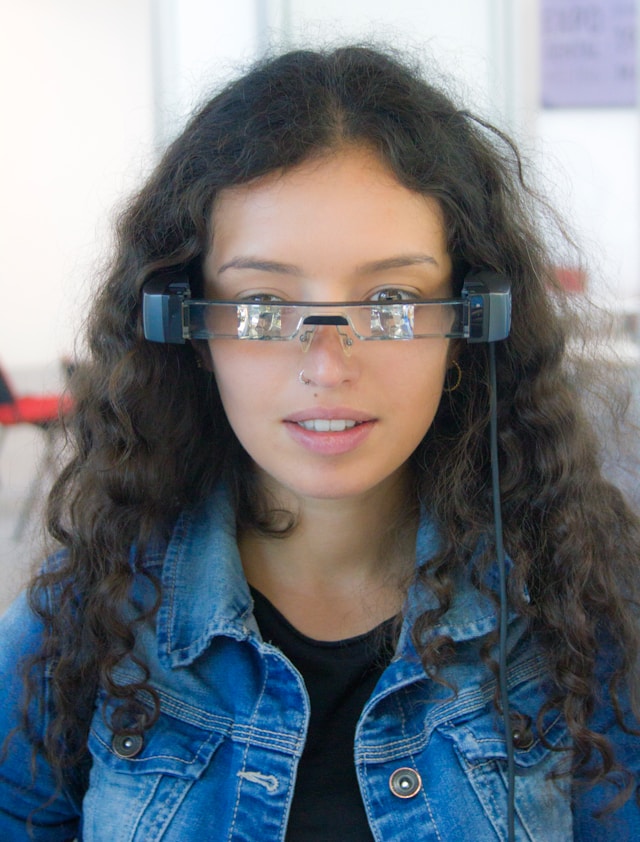
The most transformative application of live translation in 2026 is the “AR Subtitle” interface. Unlike handheld apps that require you to look down and break the flow of conversation, devices like the RayNeo X3 Pro and the new Meta Ray-Ban Display project text directly onto the air. As someone speaks to you in Japanese, French, or Arabic, their words are captured by a sophisticated microphone array, processed through a neural engine, and displayed as floating text next to the speaker’s face.
This “heads-up” interaction is a psychological game-changer. It allows for the preservation of non-verbal cues—eye contact, hand gestures, and facial expressions—that are often lost when using a phone. For the first time, we can understand the meaning of the words without losing the humanity of the speaker. In business negotiations or medical consultations, this immediacy isn’t just a convenience; it is a critical tool for building trust and ensuring accuracy.
Contextual Overlays: The Living Encyclopedia
Beyond speech, smart glasses are now “reading” the world for us through contextual overlays. Utilizing advanced Computer Vision (CV), glasses can identify text on a physical menu, a subway map, or a dense legal contract and overlay the translation directly onto the physical object. This is “In-Situ” translation—where the digital ink replaces the physical ink in your field of vision.
But the overlays go further than just language. “Contextual Intelligence” means your glasses recognize that you are looking at a specific landmark, a historical monument, or even a particular brand of product in a store. The glasses can then project “Actionable Nudges”—brief bits of information that help you make decisions. Imagine walking through a market in Marrakech; as you look at a handcrafted rug, your glasses might provide a quick overlay detailing the weaving style, the fair market price, and the history of that specific pattern. This layer of digital insight turns the entire world into an interactive, educational environment.
The Multi-Modal Pipeline: From Mic to Lens
The “magic” of real-time reality is actually a highly orchestrated multi-stage pipeline that happens in milliseconds. It begins with “Beamforming” microphones that isolate the speaker’s voice from the ambient noise of a busy street. This audio is then fed into an Automatic Speech Recognition (ASR) engine for transcription.
In 2026, the real breakthrough has been the move toward “On-Device Neural Translation.” While complex nuances still utilize 5G-connected cloud servers for processing, the most common 14+ languages (including English, Chinese, German, and Spanish) are now handled locally on the glasses’ AI chip. This significantly reduces latency, ensuring that the subtitles appear almost the instant the speaker finishes a sentence. The result is a conversation that feels fluid and natural, rather than a stilted exchange of waiting for a progress bar.
Navigating the “Lag” and Accuracy Thresholds
Despite the technological leaps, “Real-Time Reality” is not yet perfect. The primary challenge remains the “Lag”—the 200 to 500 millisecond delay between speech and sight. While nearly imperceptible for slow speakers, it can become noticeable in rapid-fire debates or group settings.
Furthermore, AI translation still grapples with idiomatic nuance and regional slang. To mitigate this, the 2026 generation of glasses often employs a “Verification Glance” feature. The display shows the raw transcription (what it heard) in a small font above the translation (what it thinks it means). This transparency allows the user to quickly verify the context if a translation seems “off,” ensuring that they aren’t misled by a rogue algorithm during an important interaction.
From Tourism to Professional Mastery
While the travel benefits are obvious, the professional applications of live translation are even more profound. In healthcare, doctors can communicate with patients in their native tongue during emergencies where every second counts and a human interpreter isn’t available. In international law, negotiators can read real-time “Sentiment Overlays” that analyze vocal tones to provide deeper context into a partner’s emotional state.
Education has also been transformed. Foreign exchange students can now sit in a lecture and follow along through “Live Captions,” while language learners use a “Shadowing Mode” where the glasses highlight the correct pronunciation of words as they see them. This turns every interaction into an immersive learning opportunity, accelerating the path to true fluency.
The Ethical Frontier: Consent and Recording
The ability to “read” the world and translate conversations in real-time brings significant ethical questions to the forefront. Is it ethical to record and translate a private conversation in a public space? In 2026, “Privacy by Design” has become the industry standard.
Most smart glasses now feature “Permission Handshakes”—where the glasses can only translate a private conversation if both parties have an “open-signal” beacon active. Furthermore, visual indicators like a glowing “Translation LED” inform those around you that the device is actively processing audio. This social contract ensures that while the language barrier is falling, the right to privacy remains standing.
Conclusion
Real-Time Reality is the ultimate fulfillment of the internet’s original promise: to connect the world. By turning our glasses into universal translators and contextual guides, we have gained a new kind of literacy. We can now walk into any city, engage with any culture, and navigate any environment with the confidence of a local. In 2026, the world is no longer a collection of isolated islands of language; it is a single, interconnected conversation, captioned and decoded in the blink of an eye. The lenses on our faces haven’t just changed how we see the world—they’ve changed how we understand our place within it.