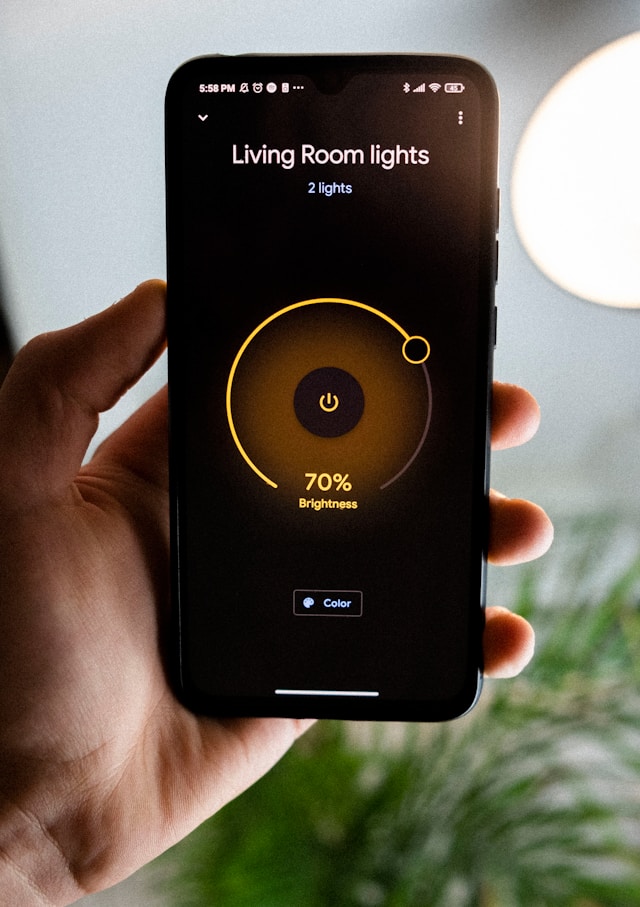
For decades, our relationship with technology has been defined by the “Screen-First” model. Whether it was the desktop monitor, the laptop, or the smartphone, interacting with the digital world required us to stop what we were doing, look down, and divert our attention into a glowing rectangle. However, as we move through 2026, we are witnessing the sunset of the screen-centric era. We are entering the age of “Ambient Computing”—a paradigm shift where technology recedes into the background of our physical environment, becoming an invisible, proactive layer of intelligence that supports us without demanding our constant attention.
The Invisible Intelligence: Defining Ambient Systems
Ambient computing, also known as “Calm Technology,” is characterized by its lack of a primary interface. It does not wait for a click or a swipe; instead, it utilizes a vast network of sensors, edge computing, and predictive AI to understand the context of our lives. In an ambient environment, the “computer” isn’t a device you carry; it is the room you are standing in, the car you are driving, and the clothes you are wearing.
The goal of these systems is to dissolve the friction between humans and machines. By leveraging voice recognition, gesture control, and behavioral pattern analysis, ambient computing anticipates needs. It is the difference between you setting an alarm and your house realizing you have a 7:00 AM flight, noticing you are still in a deep sleep cycle, and subtly increasing the light and temperature in the room to wake you naturally while simultaneously starting the coffee and pre-heating the car.
The Engine of Change: Edge AI and Agentic Workflows
The rapid maturation of ambient computing in 2026 has been driven by two major technological leaps: Edge AI and “Agentic” workflows. In the past, smart devices were often slow because they had to send data to a distant cloud server for processing. Modern ambient systems use high-performance neural processing units (NPUs) located directly on the device. This “Edge” processing allows for near-instantaneous reactions and significantly enhanced privacy, as personal data never leaves the home.
Furthermore, we have moved from “Copilot” AI—where the human directs the machine—to “Agentic” AI. These are autonomous agents capable of executing multi-step actions. If an ambient sensor in your pantry detects you are low on a specific ingredient, the agent doesn’t just notify you; it checks your digital calendar for a free window, compares prices at nearby stores, and organizes a drone delivery to arrive when you are home. The technology has shifted from being a tool we use to a partner that acts on our behalf.
The Healthcare Revolution: Ambient Clinical Intelligence
Perhaps the most profound application of ambient computing is found in healthcare. 2026 has seen the widespread adoption of “Ambient Clinical Intelligence” (ACI). In hospitals and clinics, invisible “medical scribes” use multi-modal sensors to listen to patient-doctor interactions, automatically generating accurate clinical documentation in real-time. This allows physicians to focus entirely on the patient rather than a computer screen.
Beyond the clinic, ambient “batteryless” sensors are being embedded into the homes of the elderly and those with chronic conditions. These sensors can monitor gait, heart rate, and even respiratory patterns through the air using low-power radio waves. If a person’s movement suggests a high risk of a fall, or if their breathing patterns indicate the onset of an illness, the system can alert caregivers or emergency services before a crisis occurs. This is the shift from reactive medicine to a proactive, “always-on” safety net.
The “Phygital” Retail Experience
Retail is being completely restructured by ambient intelligence, creating what industry experts call “Phygital” spaces—where physical stores operate with the data-driven efficiency of a website. In these environments, the “checkout” process has become obsolete. Using vision transformers and biometric sensors, stores can track which items a customer picks up and automatically charge their digital wallet as they walk out the door.
Interactive mirrors in fitting rooms act as ambient assistants, suggesting accessories based on the items currently being tried on and adjusting the lighting to mimic different environments, such as a candlelit dinner or a bright office. In the warehouse, Autonomous Mobile Robots (AMRs) communicate with ceiling sensors to optimize inventory flow, predicting high-demand periods and positioning products for faster fulfillment. This level of synchronization ensures that the right product is always in the right place at the right time, with zero manual input.
Cognitive Environments in the Workplace
The office of 2026 is no longer a static collection of desks; it is a cognitive environment that optimizes productivity. Ambient systems manage the “sensory load” of the workplace by adjusting acoustic dampening, lighting, and airflow based on the number of people in a room and the nature of the work being performed.
In collaborative spaces, ambient “digital twins” track the progress of physical projects, automatically updating project management software as milestones are met in the real world. For the remote worker, ambient computing helps mitigate the “zoom fatigue” of the previous decade. Smart cameras use eye-tracking and posture analysis to suggest breaks, while “Focus Zones” use directional audio to create a silent bubble around a worker in a busy household, effectively “muting” the rest of the world to allow for deep work.
The End of “Language Taxes” and Seamless Communication
One of the most human-centric breakthroughs in ambient computing is the elimination of the language barrier. Wearable and environmental audio systems now offer real-time, low-latency translation that feels natural. As two people speak different languages in an ambient-equipped room, the system can provide “translated audio overlays” or subtle visual subtitles on smart surfaces.
This “Ambient Translation” removes the “language tax” on global collaboration and travel. It allows for a level of cultural exchange and professional cooperation that was previously hindered by the friction of translation apps and hand-held devices. When technology handles the translation invisibly in the background, the human connection remains at the forefront.
Ethical Guardrails: Trust in the Invisible
As computing becomes ubiquitous and invisible, the conversation around ethics and consent becomes critical. For a sanctuary to be truly secure, the inhabitant must have total transparency over what is being “sensed” and why. This has led to the development of “Privacy-First” hardware, where physical shutters and “hard” kill-switches are standard on all ambient devices.
The challenge of 2026 is ensuring that “invisible” does not mean “unaccountable.” Leading technology providers are adopting “Federated Learning” models, where the AI improves by learning from global patterns without ever accessing the specific, private data of an individual user. Establishing these trust protocols is the only way to ensure that ambient computing remains a supportive presence rather than an intrusive one.
Conclusion: Returning to the Real World
The ultimate irony of the future of computing is that the more advanced it becomes, the less we see of it. Ambient computing is the technology that finally allows us to put our phones away. By handling the digital logistics of our lives in the background, it frees us to engage more deeply with the physical world and the people in it.
We are moving toward a future where “going online” is no longer a conscious act, because we are always supported by a digital layer that understands us. The screen-first era was a necessary stepping stone, but the “Ambient Era” is where technology finally fulfills its promise: to be so well-integrated into our lives that we forget it’s even there. In the world of 2026, the most powerful computer isn’t the one in your pocket—it’s the one that has disappeared into the world around you.